
Body Type Calculator
Accurately determine your somatotype (ectomorph, mesomorph, endomorph) using proven anthropometric formulas. The ultimate free body type calculator for personalized fitness and nutrition.
The Comprehensive Guide to the Body Type Calculator: Mastering Somatotyping, Anthropometry, and Personalized Fitness
In the intricate landscape of personal health, preventive medicine, and long-term wellness optimization, understanding the precise mechanics of your inherent physiological structure is paramount to achieving sustainable vitality and effective fitness progress. A body type calculator serves as an indispensable digital utility designed to instantly determine your somatotype—whether you are predominantly an ectomorph, mesomorph, or endomorph—using proven anthropometric formulas derived from the Heath-Carter method. Whether you are a fitness enthusiast seeking to tailor your training and nutrition to your genetic predispositions, a healthcare professional screening patients for metabolic risks, an individual embarking on a structured body recomposition journey, or a curious learner seeking to understand fundamental human physiology, utilizing a reliable somatotype calculator guarantees mathematical precision and strategic foresight. This exhaustive, comprehensive guide will explore the mechanical, medical, behavioral, and strategic dimensions of body type calculations, establishing why this tool is a cornerstone of modern health literacy and proactive metabolic management.
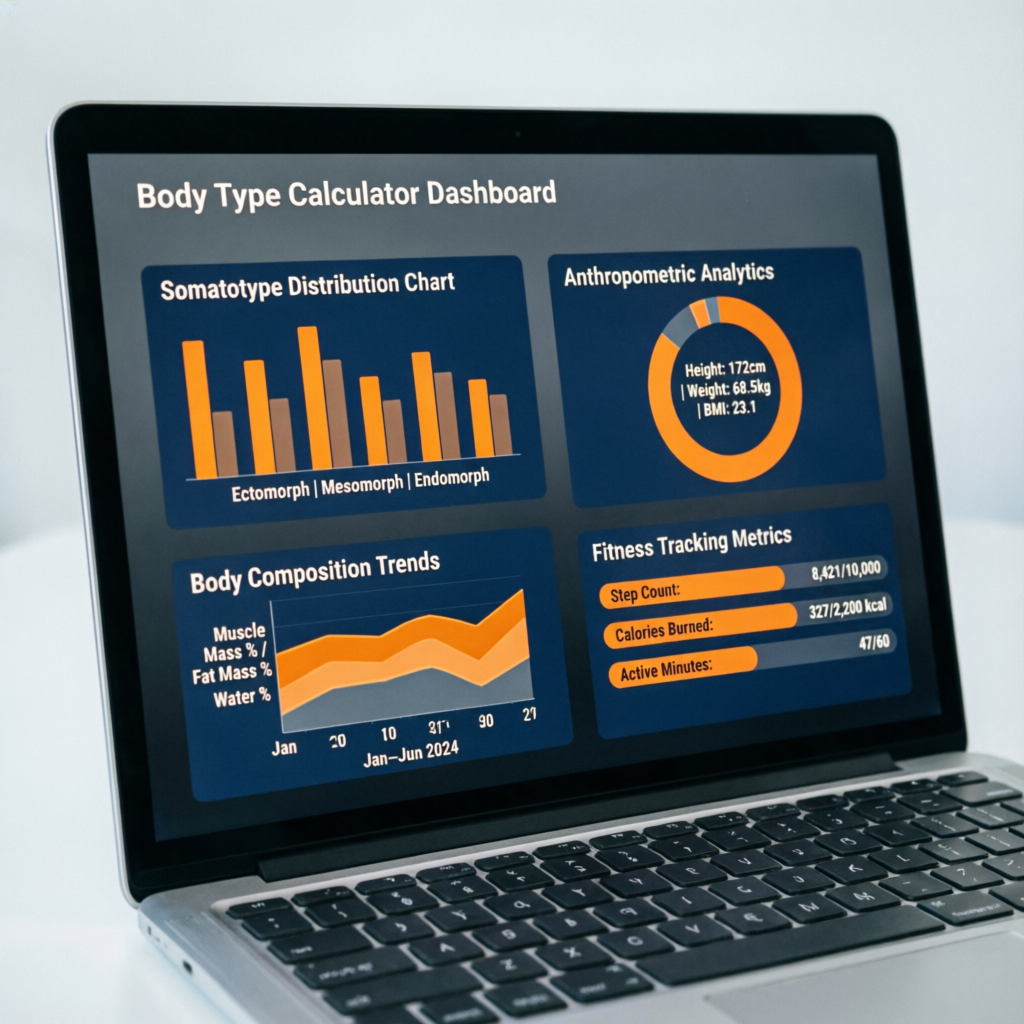
What is a Body Type Calculator and Why is it Essential?
A body type calculator, frequently referred to as a somatotype calculator, ectomorph mesomorph endomorph calculator, or physique analyzer, is a specialized software application that automates the algebraic process of determining your inherent physiological classification based on anthropometric measurements. Unlike relying on subjective visual assessments, arbitrary societal beauty standards, or simplistic bathroom scales that fail to account for bone structure, muscle distribution, and fat storage patterns, a dynamic body type calculator allows users to input specific measurements (height, weight, wrist circumference, and waist circumference), instantly deriving a standardized somatotype profile that healthcare providers and fitness professionals worldwide use to personalize training and nutrition protocols.
Historically, individuals relied on generic fitness advice, one-size-fits-all diet plans, or the flawed logic of “just eat less and move more” to achieve their body composition goals. The proliferation of digital health technologies, the rising global prevalence of metabolic syndrome, and the increasing emphasis on evidence-based, personalized fitness rendered these anecdotal methods dangerously inadequate. Today, an online body type calculator provides instantaneous, precise results accessible from any device, eliminating guesswork and ensuring that individuals operate with complete physiological transparency. By understanding exactly how your body is naturally predisposed to store fat, build muscle, and respond to different training stimuli, you can make informed decisions regarding exercise selection, macronutrient distribution, and proactive health interventions.
The History and Science of Somatotyping
To fully leverage a body type calculator, it is essential to understand the underlying scientific methodologies that drive its functionality. The concept of somatotyping was first introduced in the 1940s by American psychologist William Herbert Sheldon, who proposed that human body types could be classified into three distinct categories based on their embryological development. Sheldon’s original theory, while groundbreaking, was heavily criticized for its attempts to link body type to personality traits and behavioral tendencies—a pseudoscientific endeavor that has since been thoroughly debunked.
However, the anthropometric foundation of Sheldon’s work was refined and legitimized in the 1960s by Barbara Heath and J. E. Lindsay Carter, who developed the Heath-Carter Anthropometric Somatotype Method. This modern, scientifically validated approach abandoned Sheldon’s psychological correlations and focused purely on objective, measurable physical characteristics. The Heath-Carter method uses a combination of skinfold measurements, girth measurements, and bone breadth measurements to calculate three independent scores on a 1-to-7 scale: endomorphy (relative fatness), mesomorphy (relative musculoskeletal robustness), and ectomorphy (relative linearity or slenderness).
While our body type calculator does not require skinfold calipers (making it accessible to the general public), it utilizes simplified anthropometric proxies—specifically the Ponderal Index, wrist-to-height ratio, and waist-to-height ratio—to approximate the Heath-Carter scores with remarkable accuracy. This allows users to obtain a reliable somatotype classification using only a standard tape measure and a bathroom scale.
Deep Dive into the Three Primary Somatotypes
Understanding the distinct characteristics of each somatotype is crucial for interpreting your body type calculator results and applying them to your fitness journey. While pure somatotypes are rare (most individuals are blends of two or even all three types), recognizing your dominant traits allows for highly targeted interventions.
1. The Ectomorph: The Linear Physique
Ectomorphs are characterized by a naturally lean, slender build with long limbs, narrow shoulders, and a fast metabolism. They typically have small bone structure (reflected in smaller wrist and ankle circumferences), low body fat, and difficulty gaining both muscle mass and body fat. Their Ponderal Index (height relative to the cube root of weight) is typically high, indicating a linear, elongated physique.
Physiological Traits: High resting metabolic rate, low appetite, fast-twitch muscle fiber dominance in some cases, efficient thermoregulation. Ectomorphs often struggle with “hardgainer” syndrome in the gym, finding it difficult to add size despite rigorous training and caloric surplus.
Fitness Implications: Ectomorphs benefit from lower-volume, higher-intensity resistance training focused on compound movements. Cardiovascular exercise should be limited to preserve caloric surplus. Nutritionally, they require a significant caloric surplus (300-500+ calories above maintenance) with an emphasis on complex carbohydrates and adequate protein to support muscle protein synthesis.
2. The Mesomorph: The Athletic Physique
Mesomorphs possess a naturally muscular, athletic build with broad shoulders, a narrow waist, and moderate bone structure. They gain muscle easily, lose fat relatively quickly, and respond exceptionally well to both resistance training and cardiovascular exercise. Their wrist-to-height ratio is typically moderate to high, indicating robust skeletal framing, while their waist-to-height ratio remains low.
Physiological Traits: Moderate to high resting metabolic rate, efficient nutrient partitioning (calories are preferentially directed toward muscle rather than fat storage), high testosterone and growth hormone responsiveness. Mesomorphs are the “genetic lottery winners” of the fitness world, often achieving impressive physiques with relatively modest effort.
Fitness Implications: Mesomorphs thrive on a balanced training regimen combining moderate-volume resistance training with regular cardiovascular exercise. They can tolerate a wider variety of dietary approaches, from moderate-carb to lower-carb protocols, and typically achieve optimal results with a slight caloric surplus for muscle gain or a moderate deficit for fat loss.
3. The Endomorph: The Round Physique
Endomorphs are characterized by a naturally softer, rounder build with a tendency to store body fat, particularly in the abdominal, hip, and thigh regions. They typically have larger bone structure (reflected in larger wrist and ankle circumferences), a slower metabolism, and difficulty losing body fat. Their waist-to-height ratio is typically higher, indicating central adiposity.
Physiological Traits: Lower resting metabolic rate relative to body mass, higher appetite and cravings for energy-dense foods, greater efficiency in fat storage, potential insulin resistance. Endomorphs often find that even modest caloric surpluses lead to rapid fat gain, while caloric deficits result in stubborn fat retention.
Fitness Implications: Endomorphs benefit from higher-volume resistance training combined with frequent cardiovascular exercise to increase total daily energy expenditure. Nutritionally, they typically respond best to lower-carbohydrate, higher-protein, and moderate-fat diets that help manage insulin levels and control appetite. Caloric deficits must be moderate (300-500 calories) to prevent metabolic adaptation and muscle loss.
The Mathematics and Anthropometry Behind the Body Type Calculator
The logic driving our body type calculator is rooted in decades of anthropometric research and statistical regression analysis. The calculation follows a rigorous, multi-step process to ensure your somatotype classification is both effective and physiologically accurate.
Step 1: The Ponderal Index (Ectomorphy Proxy)
The Ponderal Index (PI) is a measure of leanness calculated as height divided by the cube root of weight. It is the primary determinant of ectomorphy. A high PI (>43) indicates a linear, ectomorphic build, while a low PI (<38) indicates a stockier, endomorphic build.
PI = Height (cm) / ∛Weight (kg)
Step 2: The Wrist-to-Height Ratio (Mesomorphy Proxy)
Wrist circumference is a reliable proxy for skeletal frame size and bone density, which are key components of mesomorphy. A higher wrist-to-height ratio indicates a more robust, mesomorphic skeletal structure.
Wrist Ratio = Wrist Circumference (cm) / Height (cm)
Step 3: The Waist-to-Height Ratio (Endomorphy Proxy)
Waist circumference relative to height is a well-validated indicator of central adiposity and overall fatness, which are the defining characteristics of endomorphy. A higher waist-to-height ratio indicates greater endomorphic tendencies.
Waist Ratio = Waist Circumference (cm) / Height (cm)
Step 4: Score Normalization and Classification
Our calculator converts these raw anthropometric ratios into normalized scores (0-100%) for each somatotype component. The highest score determines your primary body type, while the secondary score reveals your blended traits. This multi-dimensional approach acknowledges that human physiology exists on a spectrum, not in rigid categorical boxes.
How to Use This Free Body Type Calculator
Our online body type calculator is engineered for maximum usability, speed, and accuracy. Follow these simple steps to generate your personalized somatotype analysis:
1️ Select Your Biological Sex: Choose male or female, as hormonal differences influence fat distribution patterns and skeletal proportions.
2️ Enter Your Age: Input your current age, as somatotype can shift slightly with age due to hormonal changes and sarcopenia.
3️⃣ Choose Your Measurement System: Select Metric (Centimeters & Kilograms) or Imperial (Inches & Pounds) based on your preference.
4️⃣ Input Your Height and Weight: Enter your current, accurate measurements. For the most accurate results, weigh yourself in the morning after using the restroom and before eating.
5️⃣ Measure Your Wrist: Wrap a flexible tape measure around your dominant wrist, just below the styloid process (the bony bump). Keep the tape snug but not compressing the skin.
6️⃣ Measure Your Waist: Wrap the tape around your waist at the level of your navel. Exhale normally and measure at the end of a normal breath. Do not suck in your stomach.
7️ Click “Calculate Body Type”: Instantly view your primary somatotype, percentage scores for all three components, and a visual distribution chart.
Tailoring Nutrition and Training to Your Somatotype
Once your body type calculator reveals your dominant somatotype, you can strategically optimize your fitness and nutrition protocols to work with your genetics rather than against them. While the fundamental laws of thermodynamics (calories in vs. calories out) apply to all body types, the method by which you achieve your caloric targets should be personalized.
Nutrition Strategies by Somatotype
- Ectomorphs: Focus on calorie-dense, nutrient-rich foods. Incorporate healthy fats (avocados, nuts, olive oil) and complex carbohydrates (oats, rice, sweet potatoes) to easily achieve a caloric surplus. Eat frequently (5-6 meals per day) and consider liquid calories (protein shakes, smoothies) if solid food intake is challenging. Protein intake should be 0.8-1.0g per pound of body weight.
- Mesomorphs: Maintain a balanced macronutrient distribution. A 40% carbohydrate, 30% protein, 30% fat split typically yields optimal results. Mesomorphs can tolerate both caloric surpluses and deficits effectively, making them ideal candidates for body recomposition (simultaneous fat loss and muscle gain).
- Endomorphs: Prioritize protein and healthy fats while moderating carbohydrate intake. A 30% carbohydrate, 40% protein, 30% fat split helps manage insulin levels and control appetite. Focus on low-glycemic carbohydrates (vegetables, legumes, berries) and avoid refined sugars and processed foods that trigger insulin spikes and fat storage.
Training Strategies by Somatotype
- Ectomorphs: Limit training sessions to 45-60 minutes to prevent excessive caloric expenditure. Focus on heavy, compound movements (squats, deadlifts, bench press, rows) with low repetitions (4-6 reps) and long rest periods (2-3 minutes). Limit cardiovascular exercise to 1-2 short sessions per week to preserve muscle mass.
- Mesomorphs: Thrive on varied training stimuli. A combination of moderate-volume resistance training (8-12 reps) and regular cardiovascular exercise (3-4 sessions per week) yields optimal results. Mesomorphs can experiment with different training splits (push/pull/legs, upper/lower, full body) to find what works best.
- Endomorphs: Benefit from higher-volume resistance training (12-15 reps) with shorter rest periods (60-90 seconds) to increase metabolic demand. Incorporate high-intensity interval training (HIIT) and steady-state cardio 4-5 times per week to maximize caloric expenditure. Circuit training and supersets are highly effective for endomorphs.
The Limitations and Modern Critiques of Somatotyping
While a body type calculator is an invaluable screening tool, it is crucial to understand its inherent limitations. Somatotyping is a descriptive framework, not a deterministic prison sentence. Your body type influences your physiological tendencies, but it does not dictate your ultimate potential.
1. The Plasticity of Somatotype
Unlike blood type or genetic sex, somatotype is not fixed. Through dedicated training, strategic nutrition, and lifestyle modifications, individuals can significantly shift their somatotype over time. An endomorph who loses 30 pounds of fat and gains 10 pounds of muscle will see their endomorphy score decrease and their mesomorphy score increase. The body type calculator provides a snapshot of your current state, not a life sentence.
2. The Influence of Epigenetics and Lifestyle
Modern research in epigenetics has revealed that gene expression is heavily influenced by environmental factors, including diet, exercise, sleep, and stress. Two individuals with identical genetic predispositions can develop vastly different somatotypes based on their lifestyle choices. This underscores the importance of viewing your body type calculator results as a starting point for optimization, not a ceiling for achievement.
3. The Danger of Somatotype Stereotyping
One of the most significant critiques of somatotyping is its potential to foster fatalistic thinking. Individuals who identify as “ectomorphs” may give up on building muscle, while those who identify as “endomorphs” may resign themselves to being overweight. This mindset is profoundly counterproductive. The goal of the body type calculator is to inform your strategy, not limit your potential. With consistent effort and intelligent programming, any individual can achieve a healthy, functional, and aesthetically pleasing physique regardless of their starting somatotype.
Real-World Examples of Body Type Calculations
To illustrate the practical application of a body type calculator, consider the following scenarios representing different physiological profiles:
A 25-year-old male, 6’1″ (185 cm), weighing 150 lbs (68 kg). His wrist circumference is 6.5 inches (16.5 cm) and his waist is 30 inches (76 cm).
Calculation: Ponderal Index = 185 / ∛68 = 46.2 (High). Wrist Ratio = 16.5/185 = 0.089 (Low). Waist Ratio = 76/185 = 0.411 (Low).
Result: Primary Ectomorph (72%), Secondary Mesomorph (20%), Minimal Endomorph (8%). This individual should focus on caloric surplus and heavy compound lifting to build mass.
A 28-year-old female, 5’6″ (168 cm), weighing 140 lbs (63.5 kg). Her wrist circumference is 6.3 inches (16 cm) and her waist is 28 inches (71 cm).
Calculation: Ponderal Index = 168 / 63.5 = 42.1 (Moderate). Wrist Ratio = 16/168 = 0.095 (Moderate-High). Waist Ratio = 71/168 = 0.423 (Low).
Result: Primary Mesomorph (58%), Secondary Ectomorph (28%), Minimal Endomorph (14%). This individual can achieve excellent results with balanced training and moderate caloric adjustments.
A 42-year-old male, 5’9″ (175 cm), weighing 210 lbs (95 kg). His wrist circumference is 7.5 inches (19 cm) and his waist is 40 inches (102 cm).
Calculation: Ponderal Index = 175 / ∛95 = 38.4 (Low). Wrist Ratio = 19/175 = 0.109 (High). Waist Ratio = 102/175 = 0.583 (High).
Result: Primary Endomorph (68%), Secondary Mesomorph (25%), Minimal Ectomorph (7%). This individual should focus on caloric deficit, lower-carb nutrition, and increased cardiovascular exercise.
Common Mistakes When Interpreting Body Type Results
Even well-intentioned individuals make critical errors when assessing their somatotype. A dedicated online body type calculator mitigates these common pitfalls:
- Taking Inaccurate Measurements: Pulling the tape measure too tight around the wrist or waist, or measuring at the wrong anatomical landmarks, can skew results by 10-15%. Always use a flexible, non-stretch tape measure and follow the measurement guidelines precisely.
- Obsessing Over the Primary Type: Focusing solely on your dominant somatotype ignores the nuance of your secondary traits. A “mesomorph-endomorph” hybrid has very different needs than a “mesomorph-ectomorph” hybrid, even though both are primarily mesomorphic.
- Using Somatotype as an Excuse: “I’m an endomorph, so I can’t lose weight” or “I’m an ectomorph, so I can’t build muscle” are self-limiting beliefs that have no basis in physiological reality. Somatotype describes tendencies, not absolutes.
- Ignoring Age and Hormonal Changes: Somatotype naturally shifts with age. Testosterone and estrogen levels decline, metabolism slows, and fat storage patterns change. Recalculate your body type every few years to account for these natural shifts.
- Comparing to Social Media Influencers: Many fitness influencers achieve their physiques through performance-enhancing drugs, professional photography, and extreme dehydration protocols. Comparing your natural somatotype to these artificial standards is a recipe for frustration and disordered behavior.
Integrating Health Tools with Other Business Utilities
Optimizing your health, wellness, and operational workflow often requires a suite of specialized tools. For instance, when preparing promotional materials for your health and wellness clinic or a major metabolic health awareness campaign, you might need to optimize visual assets to ensure your landing pages load quickly; utilizing a reliable image converter can compress files without sacrificing quality, directly supporting your client acquisition goals and user experience. Similarly, just as a snow day calculator helps schools and businesses anticipate and plan for weather-related operational disruptions and their impact on physical activity levels or clinic foot traffic, a body type calculator allows you to proactively model physiological tendencies and wellness goals across different demographic profiles. For niche markets, specialized tools are equally important; a pet calculator hub assists veterinary clinics and pet care businesses in estimating animal nutrition needs and ideal pet weight ranges, much like how our tool estimates human somatotype metrics with precision. Finally, to build a comprehensive wellness strategy, combining this body type calculator with broader smart life calculators can provide a holistic, 360-degree view of your personal or business health initiatives, ensuring every metric, goal, and wellness intervention is meticulously accounted for. For authoritative guidance on health metrics, body composition standards, and preventive care, you can also refer to the World Health Organization (WHO) resources.
Frequently Asked Questions (FAQs)
Conclusion
A body type calculator is far more than a simple arithmetic tool; it is a fundamental instrument for physiological empowerment, evidence-based fitness, and proactive health management. For individuals, it guarantees clarity, piercing through the noise of generic fitness advice to reveal an objective, actionable metric of true body composition. For healthcare professionals and fitness coaches, it is a critical component of client assessment, program design, and longitudinal health tracking. By understanding the mathematics, inherent limitations, and strategic applications of somatotype calculations, you can make informed, resilient decisions that protect your long-term vitality, optimize your training and nutrition protocols, and steadily build a foundation for a vibrant, healthy life. Bookmark this page to ensure you always have a reliable, accurate, and free somatotype estimator at your fingertips, empowering you to take control of your fitness journey with confidence, precision, and scientific clarity.
Image Converters • Snow Day Calculators • Pet Calculator Hub • Smart Life Calculators
© 2026 Calculator Tools — Estimates are for educational and informational purposes only. This tool does not constitute medical advice. Always consult a qualified healthcare provider for personalized health assessments.